
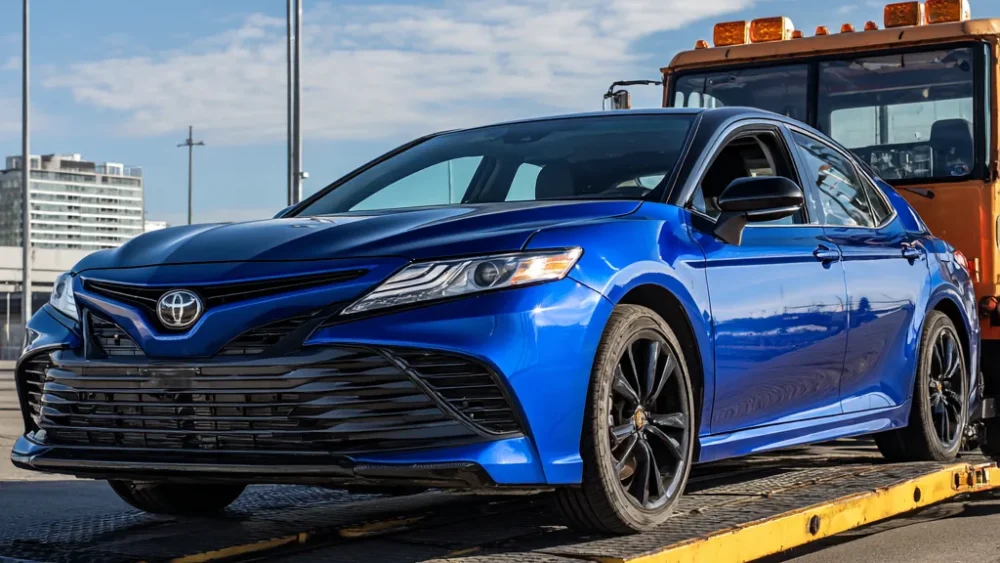
What Happens After You Win an Auction
The first thing to understand is that winning a bid doesn’t automatically move the vehicle anywhere. You’re responsible for arranging pickup, and the auction yard won’t hold it for you indefinitely. Most auction platforms like Copart and IAAI give buyers somewhere between two and five business days of free storage after payment clears. After that, daily storage fees kick in. At many yards, those fees start at $10–$40 per day and go up from there, depending on vehicle size and location. Leave a vehicle sitting for two weeks, and you could easily add several hundred dollars to what you paid at auction. Here’s the general sequence of events after a purchase:- Payment is submitted and clears (usually within 24 hours of the sale).
- The auction issues a gate pass or vehicle release. This is the document that authorizes any carrier to pick up the vehicle on your behalf.
- Free storage begins, and the countdown starts.
- Transport needs to be scheduled and confirmed within the pickup window.
- The carrier collects the vehicle from the yard, and delivery begins.
How to Transport a Car from Auction: Your Options
Using a professional auto transport company
For most buyers, this is the right move. A professional car shipping service handles everything from carrier dispatch to yard coordination and, importantly, they already know the rules at Copart, IAAI, and other major auction locations. They’re familiar with lot hours, gate pass requirements, and how to handle non-running vehicles without losing a day to back-and-forth with yard staff. Note: Carriers that specialize in auction pickup tend to move faster. They’re already running routes between major yards, so they’re not making a special trip just for your car, which keeps costs competitive and scheduling tight.Picking it up yourself
If you’re close to the yard and the vehicle runs, self-pickup can make sense. You drive there, show your gate pass, and drive home. Simple enough. But there are real limitations here. Most vehicles sold at salvage auctions are non-running, so you’d need a trailer, a flatbed, or a tow rig to get them anywhere. Plus, renting the right equipment, if you don’t have it, can eat into any savings you were expecting from doing it yourself. For vehicles in damaged condition or located more than a few hours away, the math usually doesn’t work out in favor of DIY.How the Auction Car Shipping Process Works, Step by Step
Step 1. Win the auction Your lot is assigned to your buyer account. Transport is not automatic. This is when you need to start arranging transport. Step 2. Complete payment Submit payment as quickly as possible. The vehicle release isn’t issued until payment clears, and you lose free storage days waiting on that process. Step 3. Receive the vehicle release The auction issues a gate pass or release form with your buyer number, lot number, and the specific yard location. Hold onto this — your carrier needs it to pick up the vehicle. Step 4. Schedule transport pickup Provide your transport company with the gate pass details, the vehicle’s condition (running or non-running), and your delivery address. The more accurate this information is, the smoother the pickup will be. Step 5. Carrier collects from the yard The carrier arrives during the yard’s loading hours, presents documentation, and loads the vehicle. For non-running cars, loading is typically done by the yard using a forklift or by the carrier using a winch. Step 6. Delivery to your location For domestic auto shipping, the delivery time depends on distance and route. Short hauls under 500 miles usually arrive in 2–4 days. Cross-country shipments usually take 7–14 days. Most carriers provide tracking or regular check-ins along the way.How Much Does It Cost to Ship a Car From an Auction
Shipping costs vary more than most buyers expect, and the vehicle itself is only one piece of the equation. A general ballpark for domestic transport runs from about $300 for short regional hauls up to $1,500 or more for cross-country delivery. Non-running vehicles, oversized trucks, and specialty carriers push costs higher. The main factors that determine your price:| Factor | How It Affects Cost |
| Distance | Longer routes cost more in total, but the per-mile rate drops as distance increases — roughly $1.00+/mi under 500 miles, $0.50–$0.75/mi over 1,500 miles |
| Vehicle condition | Non-running vehicles require winch-capable or flatbed carriers, which adds $100–$300 over standard rates |
| Vehicle size | Full-size trucks, SUVs, and vans take up more space on a carrier and cost more to move |
| Open vs. enclosed transport | Open is standard and more affordable. Enclosed adds protection for high-value or low-damage vehicles and typically runs 50–80% more |
| Yard location | Remote yards with limited carrier traffic often mean higher quotes and longer wait times for dispatch |
| Timing and demand | Fuel prices, seasonal demand (winter in northern states is typically more expensive), and carrier availability all shift rates |
Shipping Non-Running and Salvage Vehicles
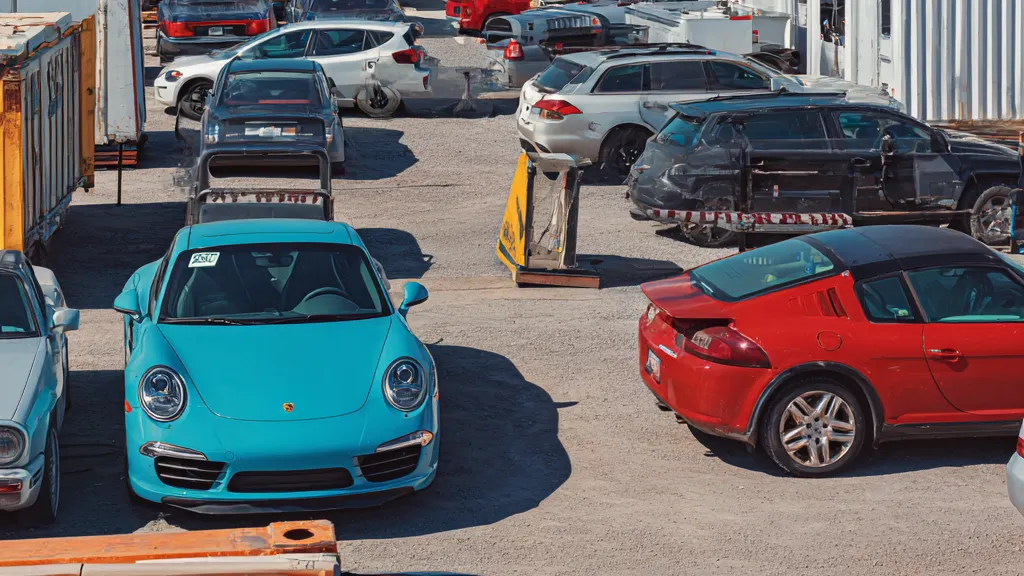
A large share of vehicles sold at auction, especially salvage cars for sale at Copart and IAAI, are non-running, damaged, or missing keys. That doesn’t make them unshippable, but it does mean the transport setup needs to match the vehicle’s condition from the start. Shipping your car after buying it at an auction typically involves one of two loading methods: a winch-equipped carrier that pulls the vehicle up without requiring it to move under its own power, or a forklift at the auction yard that lifts the vehicle directly onto a flatbed. Most major auction yards have forklifts on site, so this is more common than buyers realize, but you need to confirm the vehicle’s condition in your shipping order so the right equipment is sent. Flood, fire, and heavily damaged vehicles sometimes require additional strapping or crating, and carriers will want to know about those conditions in advance. Don’t assume that “just damaged” covers everything — be specific when booking salvage car shipping. It saves a lot of back-and-forth on pickup day.Domestic Shipping in the USA: What to Expect
Most buyers shipping a salvage vehicle within the US choose between door-to-door and terminal-to-terminal service. Door-to-door is exactly what it sounds like: the carrier picks up from the auction yard and delivers to your home, shop, or other address. It’s the most convenient option, and typically the one most transport companies default to for auction buyers. The car transport carrier handles yard coordination and delivers directly, which significantly reduces your involvement in logistics. Terminal-to-terminal means the vehicle is delivered to a regional drop-off hub near your location, and you pick it up from there. It’s sometimes cheaper on longer routes, but it adds a step and can require flexibility on timing. For most individual buyers, door-to-door is simpler and worth the modest additional cost. In terms of timing, here’s a reasonable breakdown for domestic routes:- Under 500 miles — typically 2–4 days transit
- 500–1,500 miles — typically 4–7 days transit
- 1,500+ miles (cross-country) — typically 7–14 days transit
Tips for Shipping a Car Safely After an Auction Purchase
- Confirm the vehicle’s condition before booking transport. Running vs. non-running isn’t a minor detail. It determines what equipment the carrier brings.
- Verify your transport company is FMCSA-licensed. Licensed carriers carry cargo insurance; unlicensed ones don’t. Ask for their MC number before booking.
- Check cargo insurance coverage. Standard carrier liability may not cover the full value of a damaged or high-value vehicle. Confirm what’s included and whether you need supplemental coverage.
- Provide accurate pickup details. The lot number, gate pass number, yard address, and buyer ID must all be correct. One mismatch can delay pickup by a full day.
- Don’t wait for transport. Book it the same day you win, or as close to it as possible. Pickup windows are short, and good carriers fill up fast.


Leave a Reply
You must be logged in to post a comment.