
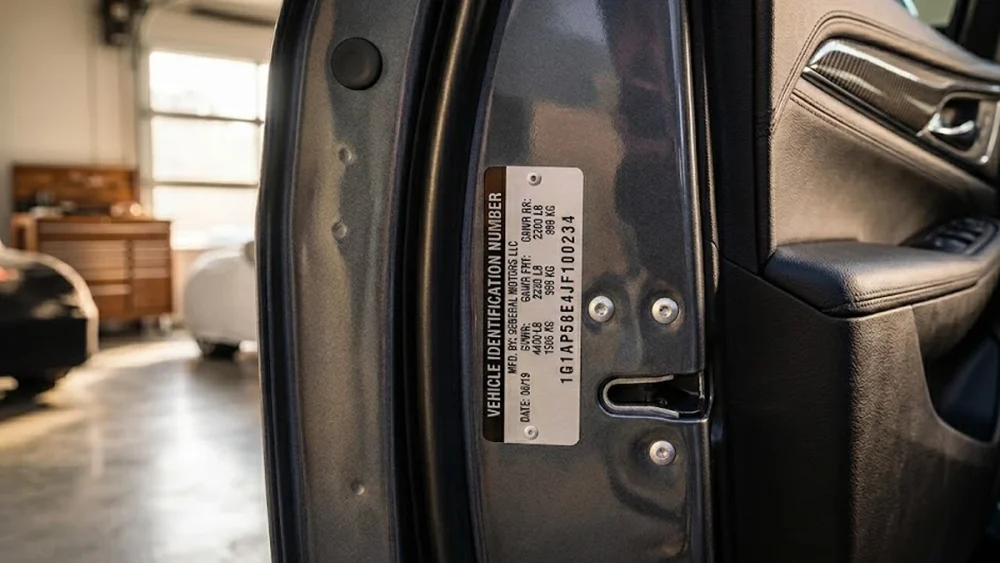
Buying a used car without checking its history is a gamble. A vehicle can look spotless in photos, drive smoothly around the block, and still carry a hidden salvage title, a rolled-back odometer, or storm damage beneath a fresh coat of paint. This is where choosing between a free VIN report vs paid history report becomes critical. In this article, we break down exactly what each option covers, where each one falls short, and when a paid report is not just helpful but essential.
Key Takeaways
- Free VIN decoders reveal factory specifications (engine type, trim level, and recall status) but nothing about a vehicle’s life on the road.
- The difference between free and paid VIN checks comes down to post-sale data: accidents, title brands, odometer records, and auction history are only available through premium reports.
- According to the NMVTIS, roughly 1 in 5 used vehicles in the U.S. has a title problem — a risk no free tool can detect.
- A paid report typically costs $6–$40. Skipping it on an $8,000 purchase to save $20 is rarely a sound trade-off.
- Title washing, where a totaled vehicle receives a clean title after crossing state lines, is one of the most dangerous risks in the private-sale market. A paid report can help uncover title inconsistencies that may indicate title washing, especially when combined with NMVTIS and state title data.
- A paid report can help surface title brands or lien indicators before shipping.
- Use free decoders to narrow down a large pool of candidates. Reserve paid reports for the final one or two vehicles before placing a bid or signing a contract.
Can You Get a Truly Free Vehicle History Report?
Most truly comprehensive vehicle history reports are paid, while many free tools provide only limited data or a preview.
Commercial vehicle history providers, such as ClearVin, CARFAX, and AutoCheck, aggregate data from multiple public and proprietary sources, which is why full reports are typically paid.
Sites that advertise a full free vehicle history report vs paid alternatives almost always deliver one of two things: factory data dressed up to look like a history report, or a heavily abbreviated preview designed to prompt an upsell. Neither provides the information needed to determine whether a vehicle has been wrecked, flooded, or title-washed.
It is also important to understand the difference in accountability between free tools and authorized providers. Authorized providers (typically paid services) must comply with regulatory requirements for collecting and presenting vehicle data, which generally makes them more reliable sources.
In contrast, non-authorized websites may present or interpret data in ways that are not strictly verified, which can sometimes lead to misleading representations of service or maintenance history.
Free tools are legitimate and useful, but serve a different purpose.
What Does a Free VIN Check Show?
A free VIN check is best understood as a factory decoder. It reads the vehicle identification number and returns the specifications that the manufacturer encoded at the time of production.
Factory Specifications and Recalls
Free decoders are useful for verifying factory specifications, such as:
- Vehicle trim level (base, sport, premium, and so on)
- Engine and transmission specs (displacement, configuration, drivetrain)
- Country of assembly and model year
- Standard and optional equipment packages
The NHTSA VIN lookup tool, available at nhtsa.gov, is one of the most reliable free resources for checking open safety recalls. It pulls directly from the federal database, so the data is authoritative. If a vehicle has an unaddressed safety campaign, you will find it here.
These are important checks, especially when buying at auction, where listings may contain trim-level errors or conflated option packages.
Missing Accident and Damage History
A free decoder usually tells you far more about the vehicle’s original configuration than its ownership or damage history.
It will not show:
- Whether the vehicle was involved in a collision
- Whether it received a salvage or rebuilt title after a total loss
- Whether the odometer has been altered
- Whether it spent time underwater after a hurricane
For that information, you need a paid report.
What Information Is Only Available in a Paid VIN Report?
This is where the real value of a paid VIN lookup vs free tools becomes clear. Premium services access databases that free decoders simply cannot access, including insurance claim records, state title transfer histories, and salvage auction archives.
Salvage Titles and Title Washing
When an insurer declares a vehicle a total loss, the state issues a salvage title status to that vehicle. It receives a permanent brand designation. In theory, buyers should always know that.
In practice, a scheme known as title washing exploits gaps between state titling laws. A totaled vehicle is transported to a state with less stringent branding requirements. There, it is re-titled, sometimes emerging with a “clean” designation despite its full history. The vehicle then re-enters the market looking like an ordinary used car.
According to the National Insurance Crime Bureau (NICB), title fraud costs American consumers hundreds of millions of dollars annually. A paid vehicle history report cross-references NMVTIS data and state title records to flag these inconsistencies. A free decoder has no access to this data.
Odometer Rollback Detection
Odometer rollback detection is one of the most valuable features a paid report provides. According to the NHTSA, odometer fraud costs American consumers more than $1 billion per year and affects roughly 450,000 vehicles sold each year.
Paid reports compile odometer readings from dealership service visits, state inspections, and auction check-ins over time. If a vehicle shows 142,000 miles at a 2022 auction and then appears with 89,000 miles at a 2024 private sale, the discrepancy is flagged immediately. No free tool tracks this kind of data.
Hidden Damage and Past Auction Photos
A professionally detailed car can look pristine even after significant structural damage or hidden flood damage. Paint, carpets, and upholstery can be replaced. Frame damage can be straightened. Moisture-related damage can remain hidden for months.
Professional services like ClearVin include actual pre-repair photographs from prior salvage auction appearances. If a vehicle spent time at a Copart or IAAI yard following a hurricane, those images may show water lines, stripped interiors, or corroded components — things a visual inspection at the time of sale will not reveal.
A paid report may also surface total loss records from insurer databases, providing an additional layer of verification beyond state title records alone.
Comparison: Free VIN Checks vs Paid VIN Reports
The table below shows at a glance what each option covers.
| Feature | Free VIN Check | Paid VIN Report |
| Factory trim and options | Yes | Yes |
| Engine and transmission specs | Yes | Yes |
| Safety recalls (NHTSA) | Yes | Yes |
| Comprehensive accident history | No | Yes |
| Salvage / junk title records | No | Yes |
| Odometer rollback detection | No | Yes |
| Hidden flood damage flags | No | Yes |
| Total loss records | No | Yes |
| Open liens (active loans) | No | Sometimes, depending on the provider |
| Previous owners and state transfers | No | Yes |
| Salvage auction photos | No | Yes (ClearVin) |
Why You Need a Paid VIN Check Before Shipping a Car
For buyers purchasing vehicles remotely (through online auctions, out-of-state private sellers, or international procurement), a paid VIN check is essential. It is the single most important due diligence step before committing to transport costs.
Shipping a vehicle across the country typically costs $500–$1,500, depending on distance and transport method, according to EasyHaul’s car shipping guide. International shipping can cost considerably more. Discovering a title problem after the car has already been transported creates a cascading financial loss: the purchase price, the shipping fee, and the cost of resolving, or writing off, a vehicle that cannot be registered.
U.S. Customs and Export Title Restrictions
This is a risk that many international buyers underestimate. U.S. Customs will not clear a vehicle for export if it carries a restricted document type. Titles branded as Junk, Parts Only, or Bill of Sale Only are not exportable. Neither are vehicles with unresolved liens.
A paid report confirms title status before any money changes hands. Spending $17 on a report can reveal that a vehicle cannot leave the country before you buy it, rather than at the port after you have already paid transport and auction fees.
Avoiding Cross-Country Transport Issues
Domestic buyers face a parallel risk. A vehicle shipped from California to Ohio with a hidden salvage history may pass a visual inspection at delivery. But when the buyer visits their local DMV to register it, the title brand surfaces. Registration is refused.
At that point, the buyer has paid the auction price, the transport fee, and potentially inspection costs for a vehicle they cannot legally drive. A free vs paid vehicle history report comparison makes the math clear: the cost of a premium report is a fraction of even the most affordable cross-country shipping quote. You can track your car during the shipping process with EasyHaul’s real-time tools, but that peace of mind starts with confirming the title is clean before the car ever leaves the seller.
When to Pay for a VIN Check: A Practical Two-Step Approach
Step 1 — Use free VIN decoders to filter at scale.
When reviewing a large pool of auction lots, free decoders help you eliminate vehicles that don’t meet your requirements. Wrong engine configuration, incorrect trim level, country of assembly — these are all visible through a free check. Use this stage to narrow 20 candidates down to 2 or 3.
Step 2 — Run a paid report on every finalist before bidding.
Once you have narrowed your selection, invest in a full paid vs free car history check for each remaining candidate. Services like ClearVin offer instant VIN check reports starting at around $6.99–$17.99. That investment can uncover a rolled-back odometer or a possible lien that could block the title transfer entirely.
Think of it as precision research: not applied to every vehicle you consider, but to every vehicle you seriously intend to buy.
Conclusion: Is a Paid VIN Check Worth It?
Yes, when you are making a meaningful purchase.
A free VIN check vs a premium paid report is not a comparison of two versions of the same product. They answer different questions. A free decoder asks: “What did the manufacturer build?” A paid report asks: “What happened to this vehicle afterward?” For any buyer spending hundreds or thousands of dollars, the second question matters most.
Saving $20–$40 on a history report and then spending $1,000 or more to ship a vehicle with a hidden salvage title or an unpaid lien is not savings — it is a preventable loss. Choosing between a free vs a paid VIN report is easy when you consider what is actually at stake.
Once you have found the right vehicle and confirmed its history is clean, the next step is arranging transport. EasyHaul ships vehicles door-to-door across the United States and internationally, with transparent pricing and real-time shipment tracking. When you are ready to ship your car, we are ready to help.
References:
- National Highway Traffic Safety Administration (NHTSA) VIN Decoder
- National Motor Vehicle Title Information System (NMVTIS)
- National Insurance Crime Bureau (NICB) VinCheck
- Federal Trade Commission — Odometer Fraud
- ClearVin Vehicle History Reports
- EasyHaul — Tips for Car Shipping Schedule
- EasyHaul — Track Your Car During Shipping



Leave a Reply
You must be logged in to post a comment.